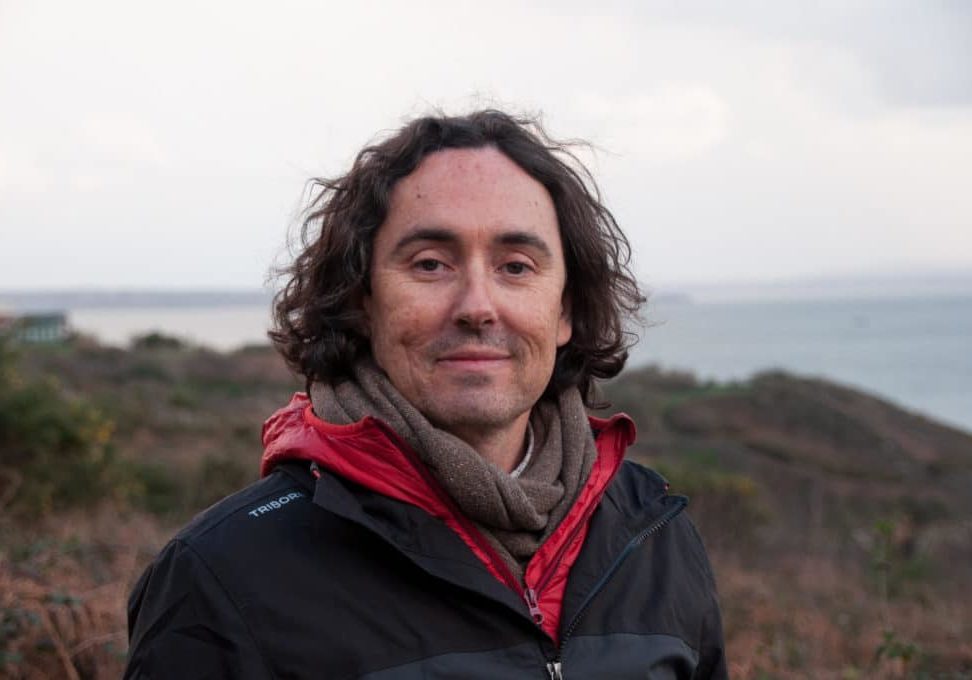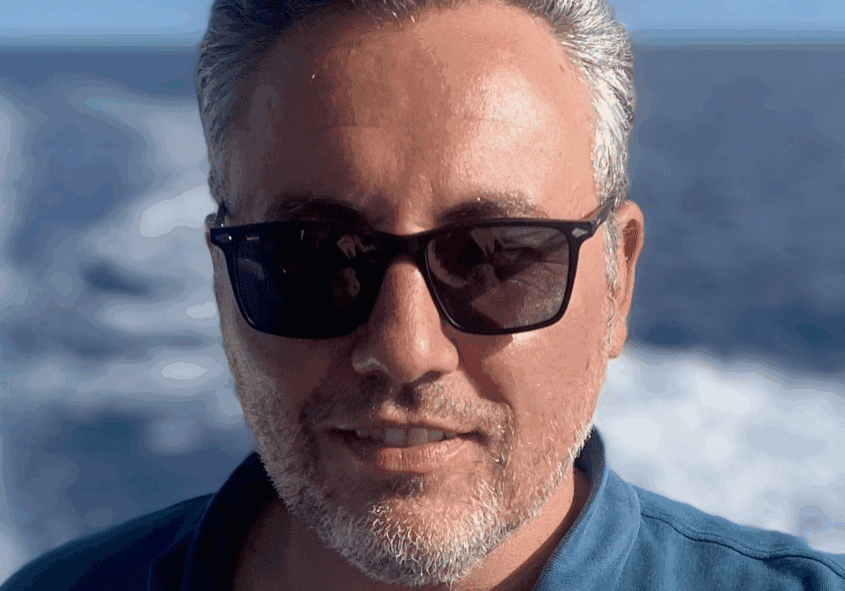
Discover the people behind FLOATFARM in our interview series!
Meet the team from CNR with 5 questions and answers about the project goals, challenges and expected impact.
Could you briefly present your organization and its role within FLOATFARM?
The CNR – Institute of Marine Engineering (CNR-INM) is a public research institute of the Italian National Research Council with consolidated expertise in naval architecture, marine engineering and hydrodynamics, particularly related to floating and offshore structures.
Within the FLOATFARM project, CNR-INM contributes to the experimental investigation of floating offshore wind technologies, supporting the assessment of platform dynamics, mooring behaviour and overall system performance under realistic marine conditions.
Could you briefly explain the work done by CNR since the start of the project?
Since the beginning of the project, CNR-INM has been mainly involved in the experimental activities aimed at validating innovative floating offshore wind solutions. In particular, our work focuses on the design, preparation and execution of intermediate-scale experimental tests of a floating offshore wind turbine platform, carried out in a relevant and realistic marine environment. These experiments will be conducted at MaRELab (Marine Renewable Energy Laboratory), a joint sea-based laboratory operated by CNR-INM, the University of Campania “Luigi Vanvitelli” and the University of Naples “Federico II”, located within the Port of Naples.
Testing the platform in such conditions allows us to evaluate its dynamic response and mooring performance under representative environmental loads, generating high-quality experimental data that directly support the objectives of the FLOATFARM project.
What do you expect to achieve in 2026?
By 2026, we expect to have significantly contributed to the experimental validation of innovative floating platform and mooring concepts for offshore wind applications. From a research perspective, the objective is to deliver robust experimental datasets and validated methodologies that can support technology upscaling, improve confidence in floating offshore wind systems, and facilitate their future industrial deployment.
From a research perspective, what’s the advantage of being part of a European project like FLOATFARM?
From a research perspective, being part of a European project like FLOATFARM means working within a high-level international and interdisciplinary framework, where experimental, numerical and industrial competences are closely integrated. This environment enables access to large-scale infrastructures, shared facilities and complementary expertise, allowing complex offshore engineering challenges to be addressed more effectively and increasing both the scientific impact and the applicability of the research outcomes.
Why have you decided to join the consortium?
We decided to join the FLOATFARM consortium because the project addresses key technological challenges in floating offshore wind, where experimental validation in realistic marine conditions is a crucial step towards deployment. FLOATFARM offers a valuable opportunity for CNR-INM to apply its long-standing experience in marine and offshore experimental research within a strategic European initiative, contributing to the development of sustainable energy solutions with strong scientific, technological and societal impact.